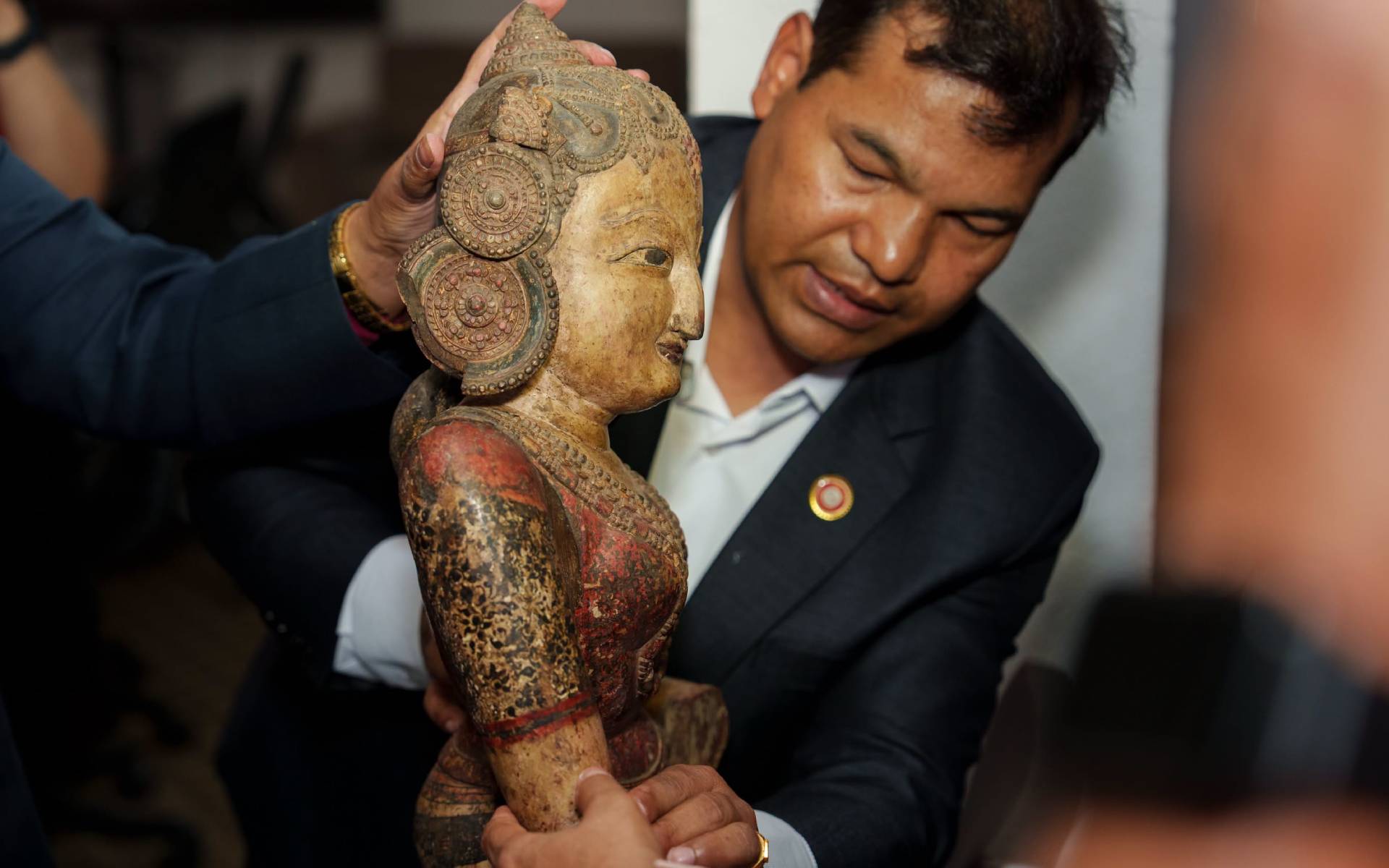
Two sacred treasures were returned to Nepal from the Museums in New York, USA in June. These artifacts are the 13th-century Padmapani and 16th-century Nrityadevi. The Padmapani statue was returned from the Metropolitan Museum of Arts of Manhattan of New York and the Nrityadevi statue was returned from the Berkley Art Museum of America.
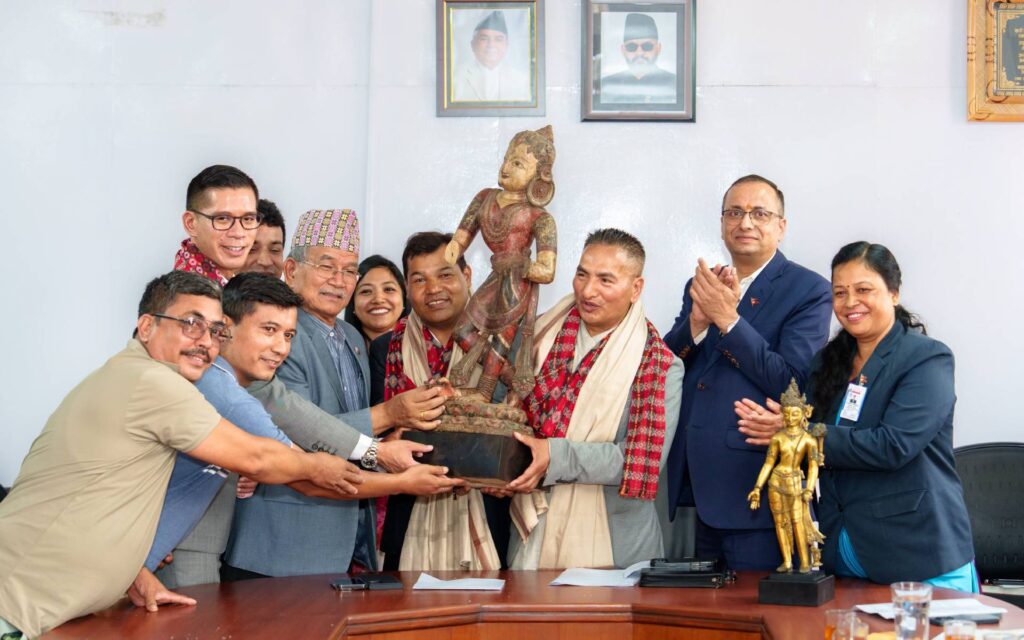
The two special artifacts arrived in Nepal on June 25 but were officially handed over to the Department of Archaeology on July 6 during a special ceremony at the department’s office, marking another milestone in reclaiming the nation’s stolen artifacts.
The artifacts were jointly handed over by Rajendra Maharjan, President of Newa Guthi of New York, and Mike Harker, Public Affairs Chief of the US Embassy. The repatriation of these treasures was made possible with the coordination of the Consulate General of Nepal and Newa Guthi of New York.
The Diplomat Nepal looks into the history of these statues and what this means for Nepal’s cultural diplomacy.
Tracing history
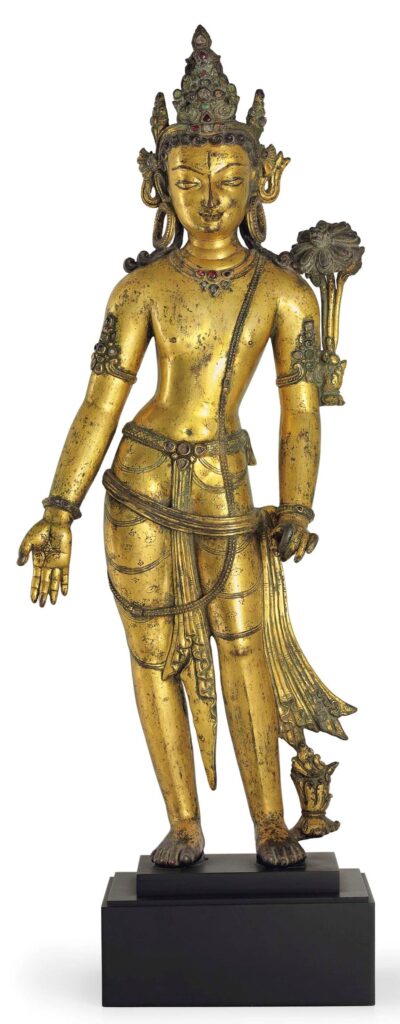
Both the statues hold historical and cultural significance. The 13th century Padmapani Lokeshwor statue is a gilt bronze sculpture of Padmapani standing with his right hand in varadamudra (wish-granting gesture). He is dressed in a dhoti incised with a stippled pattern and secured with a beaded belt with pendant ribbon, adorned with the sacred thread and sash hanging across the hips. The Padmapani statue originally belonged to Tham Bahil (Vikramashla Mahavihar, Bhagawan Bahal) of Thamel and was presumably stolen in the 1980s.
Padmapani, also known as Avalokiteshvara, is a bodhisattva of compassion, and one of the principal deities in Mahayana Buddhism. Padmapani is a highly revered Sanskrit term in Mahayana Buddhism meaning “Lotus in Hand”. He is famous for holding a blossoming lotus, symbolizing purity and spiritual awareness while vowing to liberate all beings from suffering.
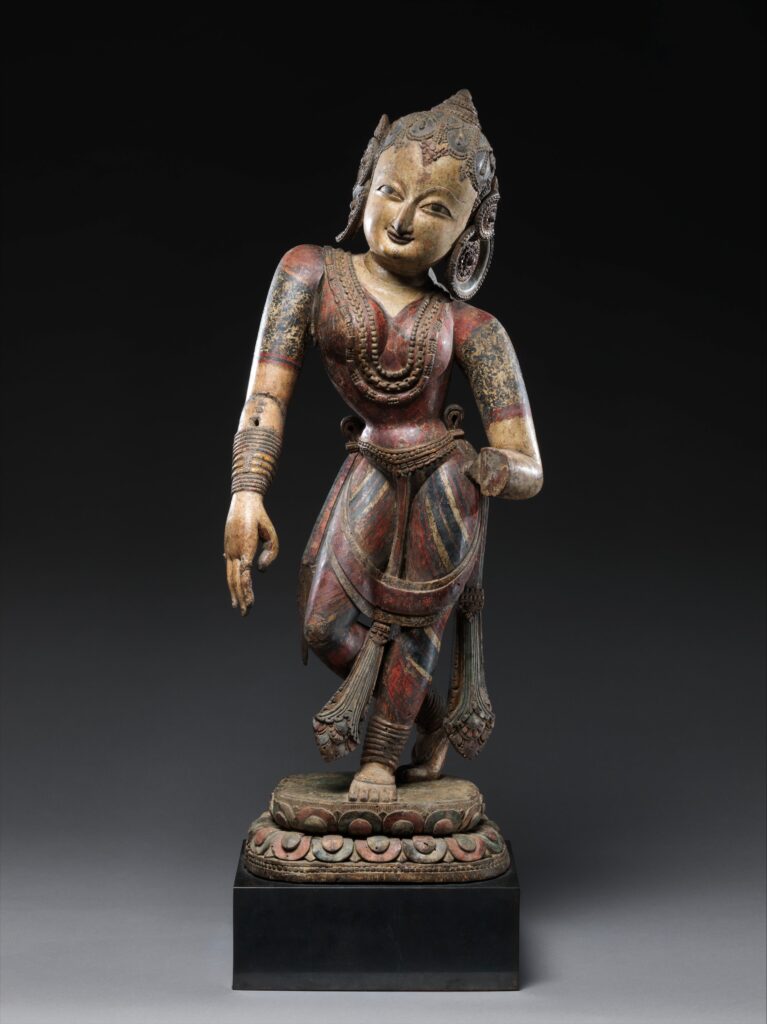
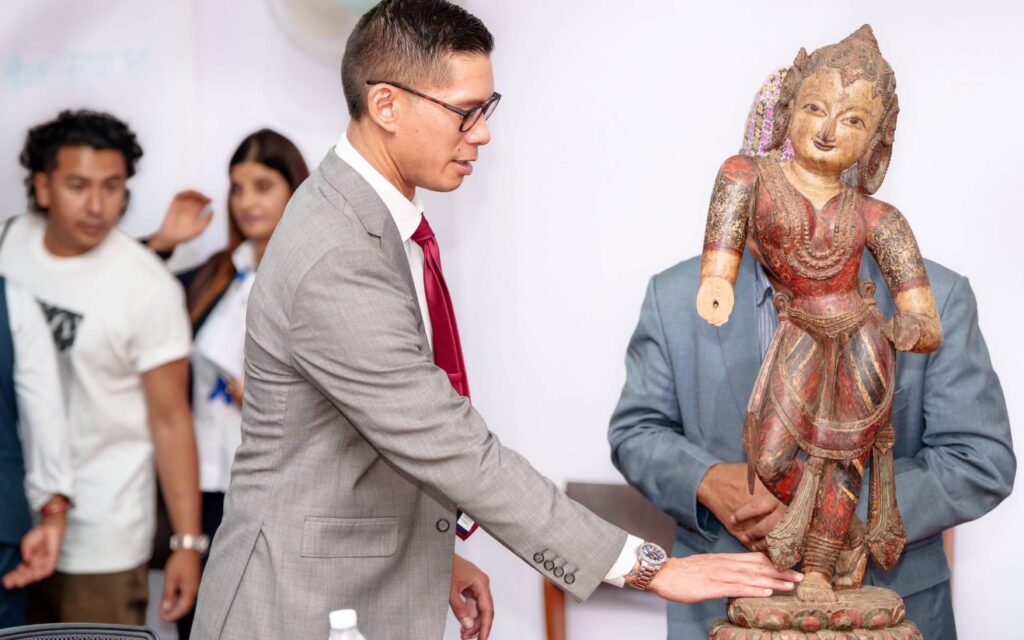
The 16th century Nrityadevi statue is a polychromed wooden scripture of the Goddess of dance. The dancer is a form of a Buddhist savior, a counterpart to bodhisattvas as Avalokiteshvara in the form of Cintamani Lokeshvara. This goddess gestures with her lower hand, evoking her boon-granting power. This 16th century statue originally belonged to Ibaha Bahi of Lalitpur and was presumably stolen between 1988 and 1989.
Nrityadevi is the Goddess of Dance and is deeply rooted in Nepali art and religious history. According to the Philadelphia Museum of Arts, the goddess stands in a classic Nepali dance posture–legs crossed, torso swaying, hands poised in graceful, reassuring gestures.
According to Sarita Subedi, Archaeology Officer at the Department of Archaeology, the Nrityadevi statue is one of the statues that are rare and can be counted as a handful. The Nrityadevi statue that has been recently recovered is one of the statues that have lost its hands which was in possession with the DoA prior to the recovery of the statue.
Cultural significance
Both the statues hold major value and cultural significance for Nepal. When asked why these two statues were specifically highlighted during the ceremony, Subedi said, “For us, all artifacts and statues are important and we release press news and ceremonies for every artifact that has been recovered. But these statues are still very valuable as they are Madyakalim statues.”
Madyakalim translates to medieval, meaning that the two statues are ancient statues. This also means that the statues hold a lot of historical value and educate us regarding the art and culture of the ancient times.
For instance, the Nrityadevi statue can showcase multiple elements regarding Nepal’s culture and history. It not only presents the art from that time period but also displays some of the hallmarks of Malla fashion. The statue’s densely patterned floral medallions cover her form-fitting shirt, while a striped skirt clings to her legs. Draped across her thighs is a flowery sash, and three pendants that appear frozen in mid-swing hang from her waistband. A beaded headdress supports her heavy disk-and-peacock earrings. Ornate beads and link necklaces, bracelets, armlets, and anklets complete her outfit. Such textiles and jewelry reflect the wealth accumulated in Nepal from trade between Tibet and India during the Malla period.
“These statues showcase artistic values. We see the clothes the statue is wearing, the ornaments they have, and the dance poses they do. The artist really portrayed that era’s historical art perfectly,” said Subedi.
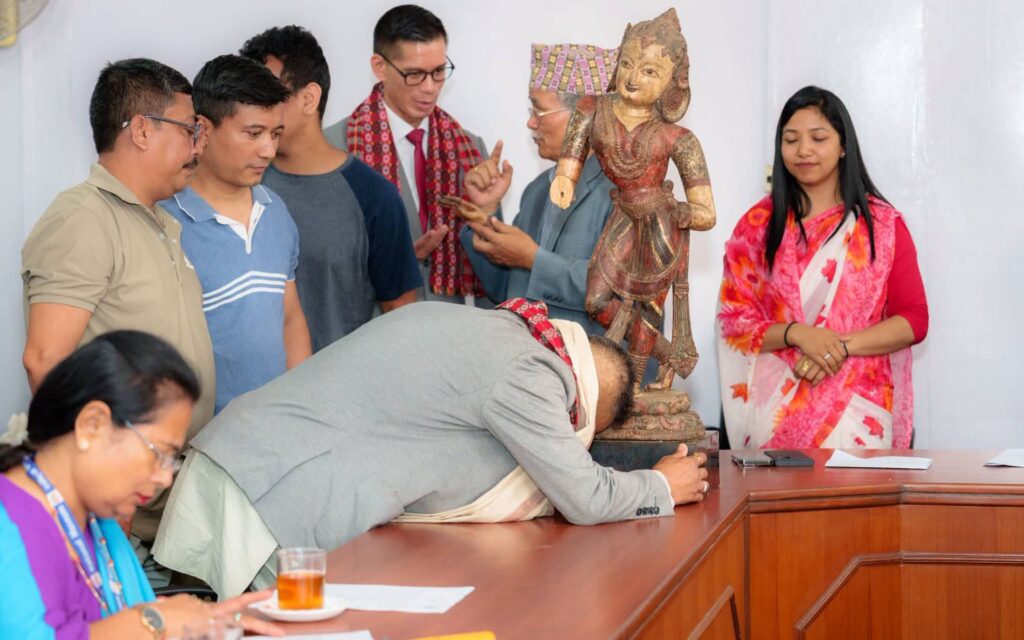
Beyond historical value, the statues also hold a great cultural and religious significance. Subedi further explained: “The value of these statues is in the way they are displayed during festivals. They are valuable as they allow people to perform rituals with the statue and also appreciate the art.”
In a more religious context, the statues can be presented for rituals and worshipping. Specifically, the Padmapani statue holds abundant religious value. In Buddhism, Padmapani is a primary manifestation of Avalokiteshvara, the Bodhisattva of Infinite Compassion. The portrayal of Padmapani, with his lotus flower and vase, represents the ideal of purity and abundance. The return of the Padmapani can symbolize the return of the deity to Buddhists. It gives Buddhist people a symbol to celebrate and worship.
“The value of these artifacts cannot simply be measured,” said Subedi. “I would say they have infinite value. This is also why it brings us great joy upon the return of the statues.”
Recovering heritage
The theft and trafficking of these two statues, alongside other stolen artifacts, was a great loss to the nation. The recovery of the statues also took significant time. “One reason that it took so long to recover the statues is because it wasn’t initially reported that the statues got stolen,” said Subedi. “Had it been reported sooner, maybe we could’ve easily recovered statues even before they got trafficked.”
Although there is no exact evidence regarding how the statues got stolen and trafficked to the US, it can be said that mismanagement and lack of timely reporting resulted in the delay of their recovery.
The recovery of the statues, even after being located, was also a long process. According to Subedi, the statues could not be recovered earlier because evidence had to be gathered first. “We needed to make a report about the statues before we could bring them back to Nepal.”
One of Nrityadevi’s hands has been cut off. The DoA had the hand in their possession for years and had even shown it as evidence. Even though the hand was shown as evidence that the statues belonged to Nepal, the Museums were still reluctant to give the statues back. Subedi stated that it’s the process of writing the report, getting rejected, and then going back to provide more evidence that caused the duration of recovery to become longer.
For Subedi, the recovery of these statues mark the moment for joy and happiness for DoA. “There is a different type of feeling, a different type of happiness that comes with it. Especially since these statues came back from such a far location like the US,” she said.
Deepening cultural diplomacy
On January 8, 2026, the US Embassy and Nepal’s Ministry of Culture, Tourism, and Civil Aviation signed a landmark bilateral Cultural Property Agreement (CPA) to safeguard Nepal’s rich cultural heritage and prevent the illicit trafficking of cultural property.
This agreement helped Nepal to work to curb loss of priceless heritage to the illicit market, reduce incentives for looting, and promote responsible stewardship of cultural property. And it is this agreement which made it possible to regain 127 of Nepali antiques.
Thus, the recovery of the two statues is not only culturally significant but it also stands as a symbol of cultural diplomacy and friendly relations between Nepal and the US.
The US Embassy’s Chief of Public Affairs, Mike Harker, aptly stated what this means for Nepal-US cultural diplomacy during the handing over ceremony: “With the return of these two sacred statues, that record of cooperation grows stronger and demonstrates how criminal investigations, diplomatic coordination, and community advocacy can work together to disrupt antiquities trafficking networks. The new U.S.-Nepal Cultural Property Agreement gives our two countries an even stronger foundation to build on this work, support future investigations, and help prevent Nepal’s sacred heritage from entering the illicit market.”
The United States also congratulated the government and people of Nepal on this important milestone and said it remains committed to working alongside Nepal to protect cultural heritage, uphold the rule of law, and preserve the country’s remarkable history for future generations.
Sarita Subedi, Archaeology Officer at the Department of Archaeology, expressed her thankfulness to the US and the CPA for coordinating the recovery process with Nepal as this can enhance Nepal’s global profile by recognizing the nation’s unique contributions to world civilization, while also facilitating collaboration with American institutions.
Subedi informed that the statues will be kept in a conservatory which will allow officials to install proper security and monitoring while also allowing visitors to take a look and study the statues.