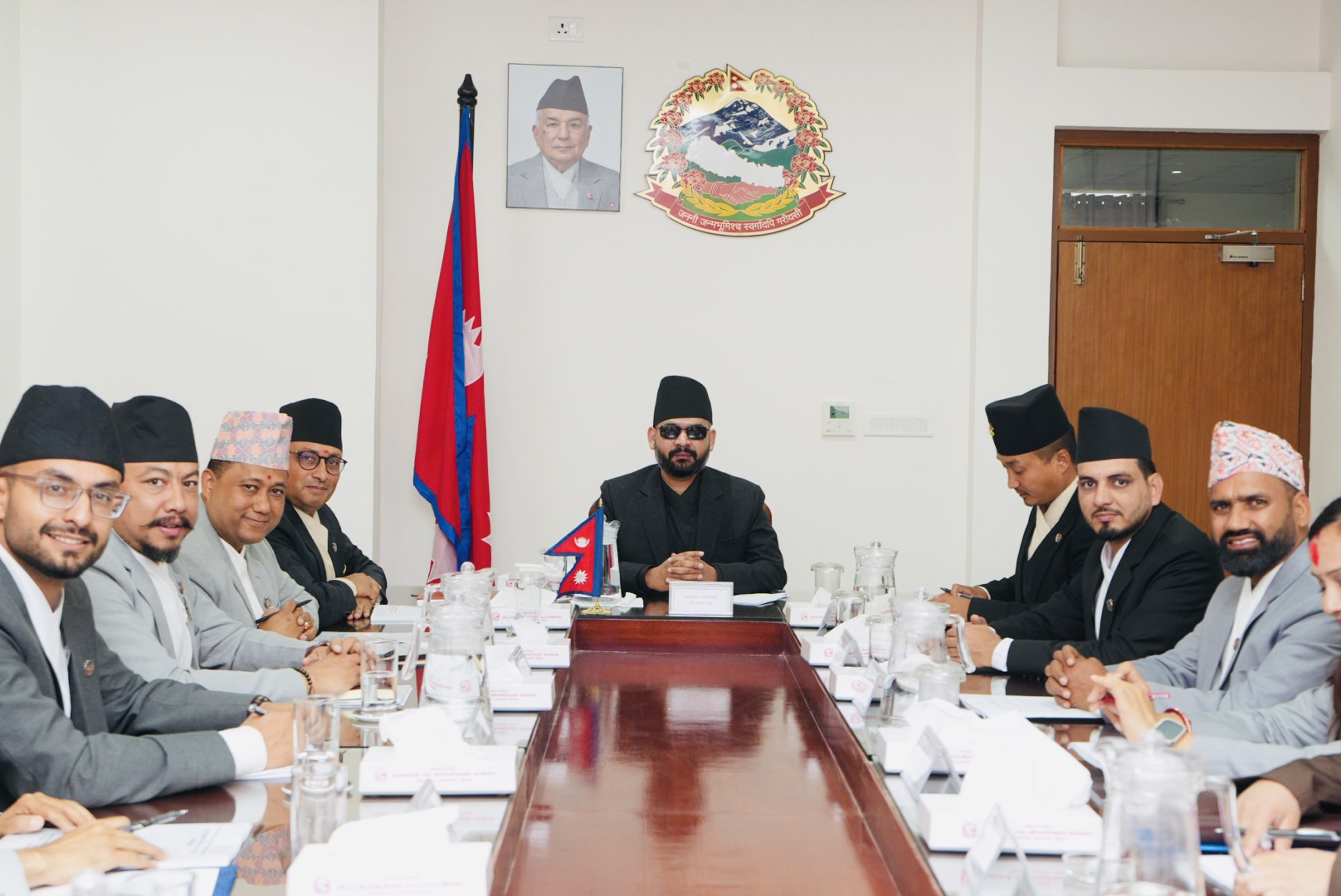
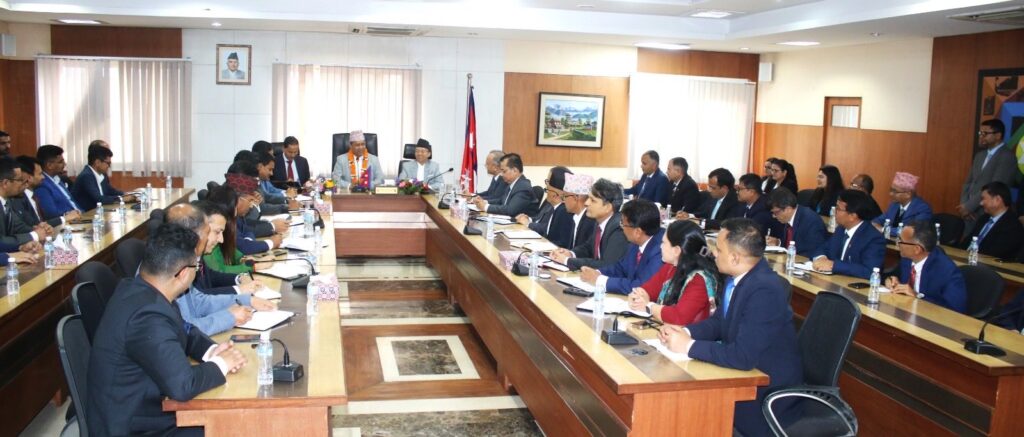
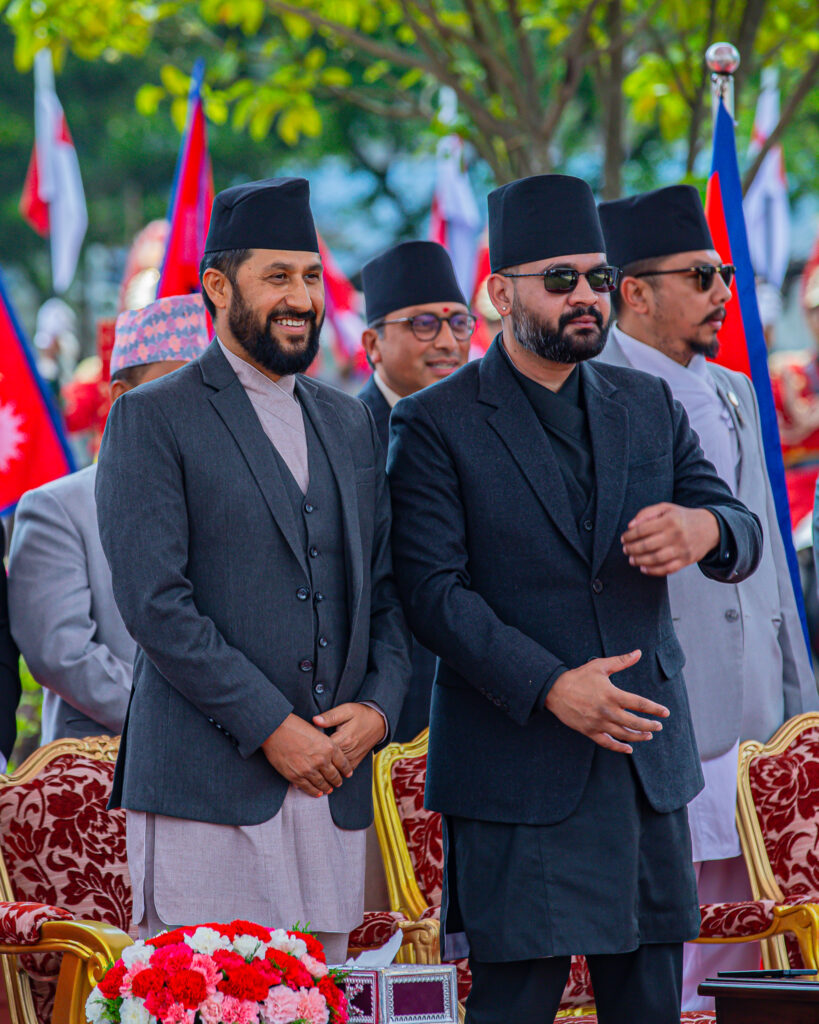
Nepal’s new powerful government, led by 36-year-old Balendra Shah, who is popularly known as Balen, will focus on economic diplomacy and shape Nepal as a vibrant bridge between the two neighbours– India and China.
“Balanced and dynamic diplomacy with both neighbours, emphasizing economic cooperation, cross-border connectivity and trade while transforming Nepal from, “a buffer state to a vibrant bridge,” states Rastriya Swatantra Party’s (RSP) election manifesto.
In the 5 March election, RSP, the four-year-old party, won a landslide victory with almost two-thirds of the 275 House of Representatives seats, overthrowing the traditional, bigger parties such as Nepali Congress, CPN-UML, Nepali Communist Party as well as other regional, smaller parties.
The new government led by Shah has a great responsibility to conduct Nepal’s crucial foreign policy. RSP had named their senior leader Shah as their new prime minister candidate. Nepali people overwhelmingly welcomed RSP’s proposal and voted to elect him as the prime minister of Nepal.
Foreign Minister and Head of the International Department of RSP, Shishir Khanal highlighted the new government’s foreign policy engagements. “Nepal’s relations with neighbours and other countries will be broadly based on the national interests of the country. We will follow the foreign policy of Nepal, which was written in the constitution and the foreign policy document,” he said. He added that his party’s government will implement economic diplomacy.
As a small landlocked country between India and China, Nepal has long been considered a buffer state, a small country sandwiched between larger rival powers. Nepal’s challenging geography in the Himalayan mountain also lent to its conceptualization as a buffer state. Nepal has sought to maintain close ties with India and China, and maintained relations with other friendly countries. Till now Nepal has maintained bilateral relations with 183 countries.
In the 18th century, King Prithvi Narayan Shah, who unified small scattered states to what is Nepal today, famously described Nepal as “a yam between two boulders,” the boulders being India and China. His statement remains relevant to date, with many scholars still using his reference in current geopolitical discussions. Following that saying, Nepal was often, and primarily, characterized as a landlocked nation between the two civilizations in the 19th and 20th centuries.
During that time, writers like Leo E. Rose stated Nepal’s foreign policy as a ‘strategy for survival’ designed to leverage its position as a buffer state. Rose also wrote a book named ‘Nepal: Strategy for Survival’ (1971). However, now, in the new millennium, Nepal is gradually transitioning its image from a landlocked state to a land-linked nation, positioning herself as a bridge between the two giants. The RSP statement from a ‘buffer state into a vibrant bridge’ for Nepal has given a strong view of foreign policy implementation of the Balen government in this critical time of international politics. The concept of a vibrant bridge was also coined by the previous governments and international communities for Nepal in the 21st century.
The fundamental objective of Nepal’s foreign policy, as per the constitution, is to enhance the dignity of the nation by safeguarding sovereignty, territorial integrity, independence, and promoting economic wellbeing and prosperity of Nepal. It is also aimed at contributing to global peace, harmony and security. The Foreign Policy 2077 also outlines various aspects of the country’s foreign policy for the future. Article 51 of the constitution clearly states that Nepal’s foreign policy should be independent and based on the Charter of the United Nations, non-alignment, the principles of Panchsheel, international law, and global peace norms.
Chiranjibi Bhandari, a PhD student at Faculty of International Studies, South Asian University, stated that geopolitical complexity for Nepal today is far greater and more challenging than during the unification of the 18th century or the restoration of democracy in the 1990s. “A balanced and pragmatic approach to foreign policy sounds ideal, but it remains challenging in practice. The government must meet the developmental needs and aspirations of the people with support from external actors, while also minimizing external pressures by diversifying its engagements and securing greater support without incurring geopolitical liabilities,” he said.
Bhandari suggested that Nepal must uphold Prithvi Narayan Shah’s guidelines of maintaining equal distance from neighbors and the principles of Panchsheel and Non-Alignment, while engaging constructively with India, China, the United States as its “third neighbour,” and other nations across the globe. He added, “Nepal’s identity, the global mobility of the Nepali people, and its strong soft power diplomacy—particularly through UN peacekeeping—are its greatest assets.”
A paper titled Nepal’s National Interests, Foreign Policy and Strategic Affairs, 2020, published by the Policy Research Institute and authored by the former Foreign Secretary Madhu Raman Acharya outlines the layers of engagement Nepal should develop, both within its neighbourhood and beyond. Acharya points out that Nepal must prioritize its diplomatic efforts based on strategic importance and investment in foreign relations. According to the paper, Nepal’s external engagement should follow this order of significance: immediate neighbours (India and China), big powers (USA, UK, France, and Russia), major partner countries, remittance generating countries, the extended neighbourhood, UN and other international and regional organizations, and other countries respectively.
The author mentions that though our past policies of ‘equidistance’ have paid off to some extent, our neighbourhood policy is not just about India and China. Acharya states that since we cannot avoid them, we should develop a policy framework of our own to engage ourselves with the neighbours.
Geopolitics expert Chandra Dev Bhatta said that fundamentals of foreign policy remain intact. “They do not necessarily change with subsequent changes in the government primarily because core components of national interests, national security, survival, and territorial integrity, are considered permanent features,” he said.
“What may change, however, is the process which is dynamic and is largely ascertained by more than one factor. For example, the approaches or strategies may change when there is a major political shift in the country either through revolution or with the arrival of new political actors.” He said that foreign policy might also need to be adjusted when there is a severe economic or political crisis in the neighboring nations and major shifts in the global geopolitics or geoeconomics with high potential to impact existing power balances in the world.
“From the recently concluded election, Nepal has new political actors. There has been some sort of regime change, that is, the regime of the traditional political parties has been changed. These actors, for all practical reasons, do not necessarily have any specific ideological baggage. By reading their manifestos they are more programmatic and development oriented political actors. The party said its priority is development diplomacy. If that is the case perhaps they will have to adopt a more pragmatic approach rather than being too normative,” he added.
The term ‘development diplomacy’ emerged after the RSP won the election. On 9 March, Indian Prime Minister Narendra Modi congratulated Rabi Lamichhane, chairperson of RSP, and then prime ministerial candidate Balendra Shah on their electoral victories in Nepal, expressing confidence in strengthening ties between the two neighboring countries. During that conversation, RSP Chair Lamichhane thanked Prime Minister Modi for his warm wishes and for recognizing the democratic mandate of the Nepali people, and stated, “RSP and our government will remain dedicated to fostering a relationship built on mutual respect and shared prosperity where RSP will prioritize on development diplomacy. We look forward to a partnership with India that scales new heights through cooperation in connectivity, cultural tourism, energy, and trade, ensuring a prosperous future for the people of both countries.” This statement has created a buzz in Nepal’s foreign policy fraternity.
Using the term development diplomacy, the RSP and its President, Lamichhane, have sought to highlight Nepal’s economic diplomacy, a strategic approach to securing foreign aid, technical assistance, foreign investment, and capacity building to achieve economic growth, strengthen diplomatic relations, and advance the country’s sustainable development goals.
Nepal, in the modern era, began taking steps toward economic diplomacy in 1996. That year, the Policy, Planning and Economic Analysis Division was established within the Ministry of Foreign Affairs to address various calls of economic diplomacy in modern times. Only recently did the Government of Nepal add the Economic Diplomacy Division to the Foreign Ministry. In fiscal year 2009, the government began allocating a modest budget to support MOFA and its missions and to accelerate economic diplomacy practices.
Nepal’s 31 embassies, three permanent UN missions (New York, Geneva, and Vienna), and 10 consulates operate under financial and human resource constraints. Only around Rs. 16 million is allocated annually by the MoFA, which is not sufficient to invest in projects that could pave the way for foreign investment. Despite these limitations, the missions continue efforts to promote Nepal’s economic interests via foreign investment, tourism, export trade promotion, development aid mobilization, and foreign employment management programs.
In the year 2017, the MoFA introduced a ‘Country Strategy for Economic Diplomacy’ outlining Nepal’s economic diplomacy approach toward 36 countries across the globe, including its two neighbours, India and China. The strategy serves as a guideline for newly appointed ambassadors, encouraging them to prioritize economic diplomacy during their tenure. To strengthen ties with China and to promote socio-economic cooperation, Nepal had established a Consulate General in Lhasa, in 1956.
Nepal’s Foreign Policy 2077 also outlines the importance of economic diplomacy. It defines economic diplomacy as the use of economic tools to pursue foreign policy goals, including trade negotiations, foreign aid coordination, labor mobility, and investment promotion. The policy notes that the COVID-19 pandemic has added new challenges to these efforts.
During his conversation with the two Nepali leaders Lamichhane and Shah, Indian Prime Minister Modi reiterated India’s commitment to working closely with the new leadership to promote the mutual prosperity and progress of both nations. “India remains committed to working together for the well-being of our two countries,” Modi said, emphasizing the long-standing cultural, economic and people-to-people ties between Nepal and India. Modi also expressed confidence that bilateral relations would continue to strengthen in the coming years through collaborative efforts. He noted that with joint endeavours, relations between the two countries would ‘scale new heights.’
On 9 March, Shah also replied to Modi by saying that the two sides would work together to strengthen the longstanding ties between Nepal and India. “Thank you for the best wishes, Honourable Prime Minister Narendra Modi. I am confident that we will cooperate to make the historical, close and multifaceted relations between Nepal and India even stronger, deeper and more result-oriented in the coming days,” Shah wrote.
Nepal needs to engage with India, China and the USA to achieve its development and economic goals to fulfill its national interest. Nepal should not only focus on development diplomacy but also on investment diplomacy.
It will be crucial for Nepal’s new government to work with India as there are many issues that are pending and need to be solved as soon as possible. In this critical phase of geopolitics in the world and region, it would be good for Nepal to build trust with its neighbours and other friends before making any important decisions. There has been a long gap between Nepal’s leadership and New Delhi’s leaders. So it would be the right time to cultivate good relations and rapport and build trust first, that will benefit people of both the countries. Without proper trust, Nepal should not raise disputed issues. Let’s build trust and properly solve those disputed issues.
Ranjit Rae, former Indian Ambassador to Nepal, also highlighted Nepal’s new government relations with New Delhi, stating that India would like their multi-faceted cooperation to be further intensified. “In particular, sectors such as hydropower, tourism, IT, and infrastructure have huge potential. Pancheshwar multipurpose project should be finalised so that implementation can begin,” he said. “Both governments should recommit to being sensitive to each other’s security interests and concerns. The sky is the limit for our partnership.”
On the other hand, China has been observing the new government closely and have started few engagements. China had been engaging more with the Nepali Communist parties and now needs to build relations with the RSP to convert bilateral relations with the Himalayan nation. Nepal signed the Belt and Road Initiative agreement with China in 2017 and signed a new Framework for Belt and Road Cooperation agreement in December 2024 in Beijing. This agreement aims to build a Trans-Himalayan connectivity network and prioritizes ten infrastructure projects, including railways, highways, and energy projects.
Dr. Gao Liang, the Deputy Director of the Nepal Study Centre Institute of South Asian Studies Sichuan University, China, has commented that China expects Nepal’s new government to seize the current historic opportunity and firmly advance practical cooperation between China and Nepal, especially high-quality joint construction of the Belt and Road Initiative.
He further said this includes accelerating the implementation of projects in connectivity, infrastructure, trade and investment, and people’s livelihood. “Strengthening cooperation with China will help Nepal achieve faster economic development, improve people’s livelihoods, and realize national prosperity, creating a true win-win situation for both sides,” he said. “China is ready to fully support Nepal in pursuing a development path suited to its own national conditions, and together turn the China-Nepal friendship into tangible benefits for the people of both countries.”
While conducting foreign policy, Nepal’s primary goal should be building trust and enhancing soft power. By exercising soft power diplomacy and strengthening its global role in climate diplomacy, tourism, and cultural heritage protection, the RSP government led by Prime Minister Shah should continue to act as a principled yet pragmatic player in both bilateral and multilateral diplomacy.
Geopolitical expert Chandra Dev Bhatta further suggested that this is a high time that we adopt a pragmatic approach in foreign policy rather than digging holes. Yet the fact remains that foreign policy is the prerogative of the executive.
“Any adventurism on foreign policy might be disastrous for Nepal. The upcoming government will have to learn this from the past when political parties merely tried to make use of foreign policy just to remain in power. Any adventurism might have serious consequences,” said Bhatta.