
The website of the Australian Embassy in Nepal describes Australia as “a reliable and long-established partner in Nepal’s development journey,” with cooperation focused on areas of shared importance. This includes strengthening climate and disaster resilience, supporting Nepal’s institutions throughout its transition to federalism, and standing with Nepal in advancing a fairer, more inclusive and equitable society.
In an exclusive conversation with The Diplomat Nepal, H. E. Simon Ernst, Ambassador of Australia to Nepal, discusses various dimensions of Nepal-Australia relations, including his early impressions of Nepal and its majestic Himalayas. Excerpts:
Nepal-Australia relations date back to six and half decades. Looking back at this journey, how would you describe the evolution of the relationship, and what makes the friendship between the two countries particularly special today?
The bond between our two countries has strengthened markedly in recent years. At the core of that bond is the connection between our people. Thirty years ago, there were only four to five thousand Nepal-born residents living in Australia. Since then numbers have grown rapidly with a near five-fold increase in the last 10 years. Today, over 218,000 Nepalis call Australia home. Travel to Nepal is increasing rapidly too. In 2025, despite the events in September, a record 50,000 Australians visited Nepal.
Nepali people in Australia make a tremendous contribution to our country. They share their culture and traditions, enriching our society. Like most Australians they also share values of inclusion, acceptance, and respect for diversity. Economically, Nepali Australians play a critical role in important sectors such as health and aged care. Some have settled permanently in Australia but continue to maintain close links back to Nepal, including through investment. Others return to Nepal, sometimes after many years abroad, with a keen commitment to give back to their motherland.
As the Ambassador, I meet Nepalis every day who have a lived experience of Australia. Many have studied there. The achievements and calibre of these people so often humble me, but also leave me feeling proud and enormously impressed. Whether through leadership of enterprises, community organisations, the bureaucracy or indeed serving in the Cabinet, the returnee Nepalis from Australia are playing such an important role.
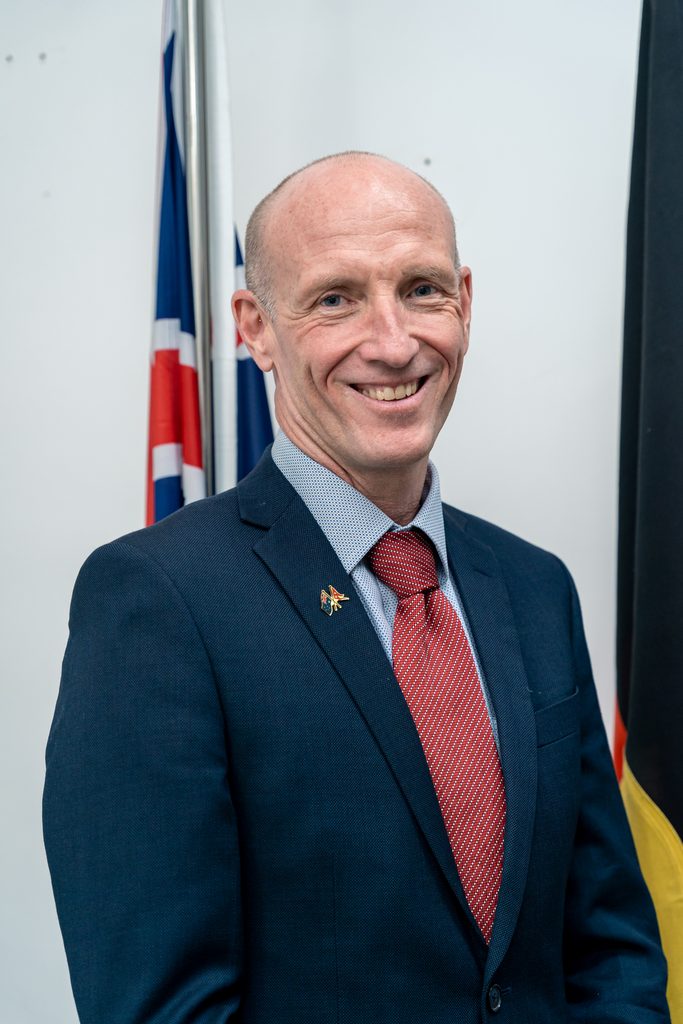
You arrived in Nepal in January 2026 and have now spent your first several months in the country. What have been your strongest impressions of Nepal so far, and what has surprised or inspired you most since your arrival?
It’s an exciting time for Nepal. In January, when I arrived, there was doubt as to whether elections would take place. There was also concern at the potential for violence. As we now know the elections were Nepal’s most peaceful ever. The results were free, fair and unambiguous. Nepalis had clearly voiced their desire for change. The new government has a tough task ahead, with considerable expectations heaped upon it. Australia wishes it every success.
As we settle into life in Nepal, the warmth of welcome has been overwhelming. We have come to understand and appreciate Nepal’s extraordinary diversity. Its remarkable cultural, linguistic, and religious variety. The richness of the country’s history and traditions and the vibrancy and wonder of its living heritage. We have also been fortunate to experience something of Nepal’s remarkable natural beauty. Our list of must-see locations grows ever longer, far longer than our three years here will allow.
I’ve spent most of my career working in development assistance. Before I arrived here, what I knew was that economically Nepal is one of the poorest countries in Asia. What I now understand is that the economic figures belie an extraordinary set of achievements of a socially progressive nation that has made outstanding gains in eliminating poverty, improving quality and access to health care, raising education and literacy levels and advancing opportunities for women and marginalised communities. Many challenges remain but so does the Nepali spirit–one of creativity, ambition and determination. Australia is proud to support Nepal on this path.
You have travelled outside Kathmandu, including to Lumbini, and have participated in a Ropain Festival (Rice Planting Festival). How have these experiences of Nepal’s communities, traditions and rural life influenced your understanding of the country and its aspirations?
The experience of Ropain emphasised for us the rural roots that most Nepalis still hold, even if they are urbanites in the Kathmandu valley. We’ve lived elsewhere in Asia but in Nepal we understand that no matter how many pre-dinner snacks are on offer, until rice is on the table dinner is yet to be served!
Lumbini is a special place not just for Buddhists but for human civilisation. At the ancient spot of Buddha’s birth, I reflected upon how wide and enduring his legacy and teachings have become. Given I visited in early June, I also tried to apply some of what I understand his teachings to be, to focus on something other than the heat!
Our favourite cultural experience so far has been attending Bisket Jatra in Bhaktapur with our friend Rabindra Puri. We stood shoulder to shoulder with thousands of others in the crowd as the giant pole was slowly stood up. It was a fascinating yet terrifying spectacle.
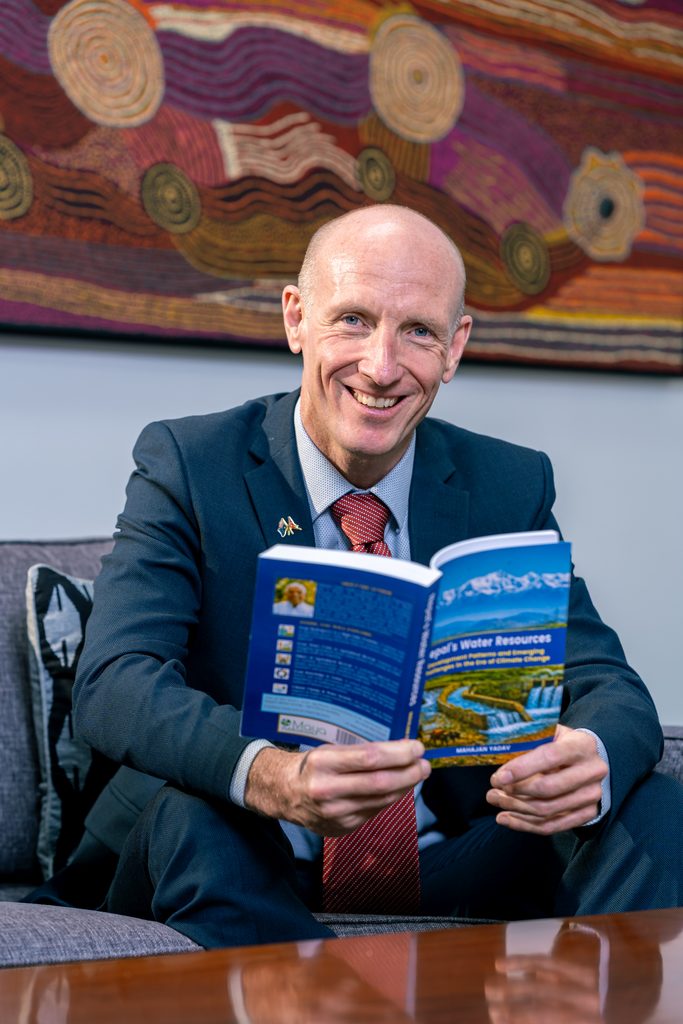
After spending these first months engaging with government leaders, local communities, young people, businesses and development partners, what do you see as Nepal’s greatest strengths and opportunities for the future?
There is a palpable sense of optimism among the population and its leaders who are keen to build a more prosperous future. The youth energise the country whilst the enterprising spirit of many Nepali I meet is inspiring.
Looking ahead, for Nepal there are many opportunities. Demographically, its young population presents a major advantage. Nepal is rich in natural and cultural heritage with tourism potential well beyond that of a ‘budget’ destination. It is blessed with abundant renewable energy resources that provide a durable foundation for sustainable growth. Increased digital technology offers the opportunity for greater integration with the global economy.
Australia is supportive of the government’s commitment to effective governance and improving the ease of doing business. There is a need for increased foreign investment and plenty of scope to increase the trade between Australia and Nepal. Particularly given the large Nepali diaspora in Australia, there is abundant potential to grow this dimension of the bilateral relationship.
Diplomatic assignments are also personal journeys. How have you and your family found life in Nepal so far? Are there particular places, experiences, traditions or aspects of Nepali life that have become especially meaningful to you and your family?
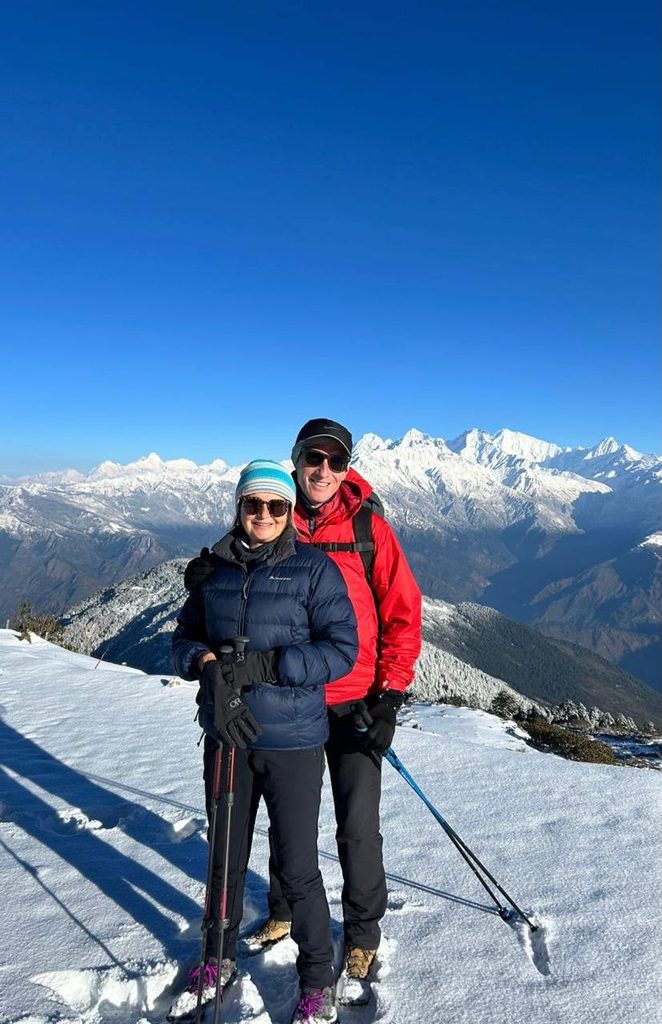
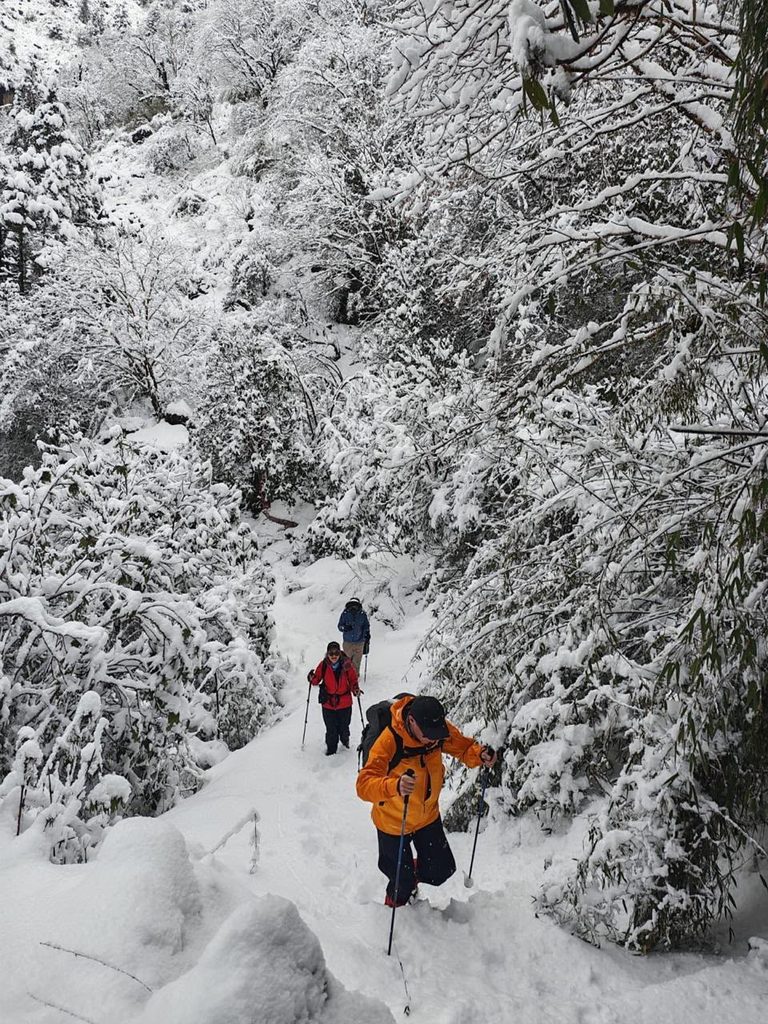
We have had so many wonderful experiences. I will share just one. In April, we trekked to Gosainkunda. The rhododendrons were out and walking through the forests of red, pink and white blooms was just magical. The weather wasn’t always clear, but to wake up after snowfall to breathtaking views of the Langtang range was another highlight. As we crossed the Lauri Binayak Pass, it began to snow heavily. We sheltered for the night at Phedi. The snow kept falling. By the morning, the trail was half a metre deep in fresh white powder. After some deliberation we decided to push on, our guide breaking trail through the deep snow. It was physically tough but exhilarating to move through the white, silent landscape, punctuated by yet more deep red rhododendron flowers, peeking through from snow-weighted branches. Our guide, Shyam, was fantastic. He navigated expertly and got us home safely, even though the path was nowhere to be seen!
Australia is home to a large and vibrant Nepali community. How can Nepal and Australia further strengthen people-to-people connections, particularly through education, skills, human resource development and mobility? And how can the Nepali-Australian community contribute even more to Nepal’s development?
Many Nepali-born Australians are now well established. They have resources to invest and an enduring connection to the country. Going forward, I am confident it is becoming easier for them to do so. At the same time, the demand for Nepali products in Australia is growing. The Nepali diaspora is hungry for foodstuffs like beaten rice or achar. Beyond the diaspora, there is a market for Nepali-made apparel, carpets, handicrafts, and artwork. It is the Nepali-Australian community that will likely lead the opening up of these trade and business opportunities.

Education has long been one of the strongest pillars of the Nepal-Australia relationship. Where do you see opportunities for deeper cooperation in higher education, vocational skills, research, innovation and opportunities for young Nepalis?
We are keen to mature the education relationship with Nepal. Today, there are over 60,000 young Nepalis studying in Australia. As significant as that is, an overseas education is still out of reach for many ordinary Nepalis. We are in discussion with the government, and in ready agreement, as to the potential for Australian institutions to offer internationally recognised qualifications here in Nepal. This might be an Australian university establishing an offshore campus or partnering with a local institution to offer joint degrees. This vision extends to faculty exchanges and students traveling in both directions. Australian students would gain so much from the opportunity to study or do a work placement here in Nepal as part of their degree. This vision also extends to technical and vocational education. GATE College is the trailblazer, delivering TAFE NSW qualifications here in Kathmandu. This is a clear demonstration of the potential of an expanded Australia-Nepal transnational education partnership.
Beyond traditional areas of cooperation, where do you see the greatest potential for expanding trade, investment and business partnerships between Nepal and Australia, particularly in technology, tourism, renewable energy, agriculture and other emerging sectors?
Right now, transnational education is the standout. But there is also enormous potential in renewable energy, both for domestic consumption and export. Australian expertise in renewable energy, sustainable infrastructure and environmental management could complement Nepal’s ambitions in these areas.
Technology is another exciting frontier. Nepal’s entrepreneurs and its young and talented workforce are creating new opportunities in information technology, digital services and innovation. Australian businesses can partner with Nepali entrepreneurs to support skills development, investment and access to international markets.
Agriculture, climate-resilient development and green livelihoods are additional areas where our countries can work together. Ultimately, the strongest opportunities will come from combining Nepal’s energy, talent and ambition with Australian expertise, investment and people-to-people connections to create partnerships that generate shared prosperity for both the countries.
You recently met with the leadership of Kathmandu Metropolitan City to discuss city-to-city cooperation. What kinds of practical partnerships could Australian and Nepali cities develop, and how might Australia’s experience support Nepal’s federal and sub-national governance?
Nepal and Australia share similar federal architecture, each with three tiers of government. As the representative of the Australian (Federal) Government here in Nepal, I am very keen to see partnerships grow and flourish at all levels. The recent Friendship City agreement between Godawari Municipality and Wyndham City Council highlights the potential for deeper local government, business, education and community partnerships.
Your visit to Lumbini and your engagement with the Lumbini Development Trust gave you an opportunity to see one of Nepal’s most important cultural and spiritual treasures. What can Nepal do to better protect its World Heritage Sites while developing sustainable and responsible tourism?
Lumbini illustrates just how special Nepal’s cultural and spiritual heritage is, not only for Nepal but for people around the world. Protecting World Heritage Sites such as Lumbini does involve a cost which should be offset by tourism revenues. The goal is to ensure that these places remain authentic, well-preserved and accessible for future generations while continuing to provide economic opportunities for local communities.
It is important that Nepal also protects its environmental heritage. Some locations and tourism providers are pioneering a move away from plastics and a stronger focus on environmentally sustainable practices. Waste management can be a challenge, particularly in remote locations. However, many visitors travel here to experience the beauty of Nepal, and protecting this makes both environmental and economic sense.
Nepal also has an opportunity to promote higher-value, sustainable tourism that encourages visitors to stay longer, learn more about local culture and make a greater contribution to local livelihoods.
Both Nepal and Australia face environmental and climate challenges while possessing extraordinary biodiversity. Where do you see opportunities for the two countries to work more closely on climate resilience, wildlife conservation, biodiversity and sustainable development?
I see particular opportunities in climate adaptation, disaster preparedness, nature-based solutions and community-led resilience. Australia is proud to support initiatives that strengthen local governments’ capacity to respond to climate risks and improve access to climate finance, while working with partners such as ICIMOD to build knowledge and practical solutions for vulnerable communities.
Australia and Nepal have a long history of collaboration on community forestry, and this has contributed significantly to Nepal’s sound reputation for environmental protection and the preservation of biodiversity. Australian agencies like the Commonwealth Scientific and Industrial Research Organisation (CSIRO) and the Australian Centre for International Agricultural Research (ACIAR) are doing important work with Nepali partners in better understanding and protecting Nepal’s water resources through managed use.
Nepal and Australia recently held the Third Bilateral Consultation Mechanism in Kathmandu. What are the key areas where you believe the two countries can now move from dialogue to more concrete and impactful cooperation?
First, trade and investment. Both countries see opportunities to expand cooperation in areas such as renewable energy, tourism, technology and agribusiness. By improving business links and encouraging greater private-sector engagement, we can help create jobs, support economic growth and strengthen the long-term prosperity of both our countries.
Second, climate resilience and sustainable development, where we can deepen collaboration on climate adaptation, disaster preparedness, renewable energy and support for communities most vulnerable to climate change. Australia is already partnering with Nepal on climate resilience initiatives, and there is scope to expand this cooperation further.
Third, education, skills and people-to-people links. The Australia Awards Scholarships program, growing educational connections and the vibrant Nepali community in Australia provide a strong platform for building future leaders, developing skills and creating lasting partnerships.
Finally, supporting good governance. With a similarly sized population and as a federal country ourselves, Australia has valuable experience to share. We are keen to support stronger economic governance and enhancement of local government capacity, service delivery and accountability.
Representing a country is both a privilege and a demanding responsibility. What has been the most rewarding aspect of your diplomatic career so far, and how do you maintain a sense of balance between your professional responsibilities and family life?
It’s an honour and privilege to represent Australia. It’s an important duty I take seriously. It also provides me with an amazing range of experiences and a richly varied insight into this wonderful country. The rewards are many and I can’t pick just one. I am very lucky. However, it is also a job and often a busy job. Work-life balance can be elusive. I like to explore the Kathmandu valley and rim by bicycle and recently had a fantastic time riding the Kora challenge. Exercise outdoors is important for me. Whether it is cycling, swimming or running, I like to get out there daily.
Finally, what message would you like to share with the readers of The Diplomat Nepal—particularly Nepal’s young generation—about the future of Nepal-Australia relations and the opportunities you hope the next generation will build together?
Overall, my strongest impression is of a country with immense potential, supported by resilient people and vibrant communities. It has been a privilege to spend these first months in Nepal, and I look forward to continuing to learn from and engage with people across the country in the years ahead.