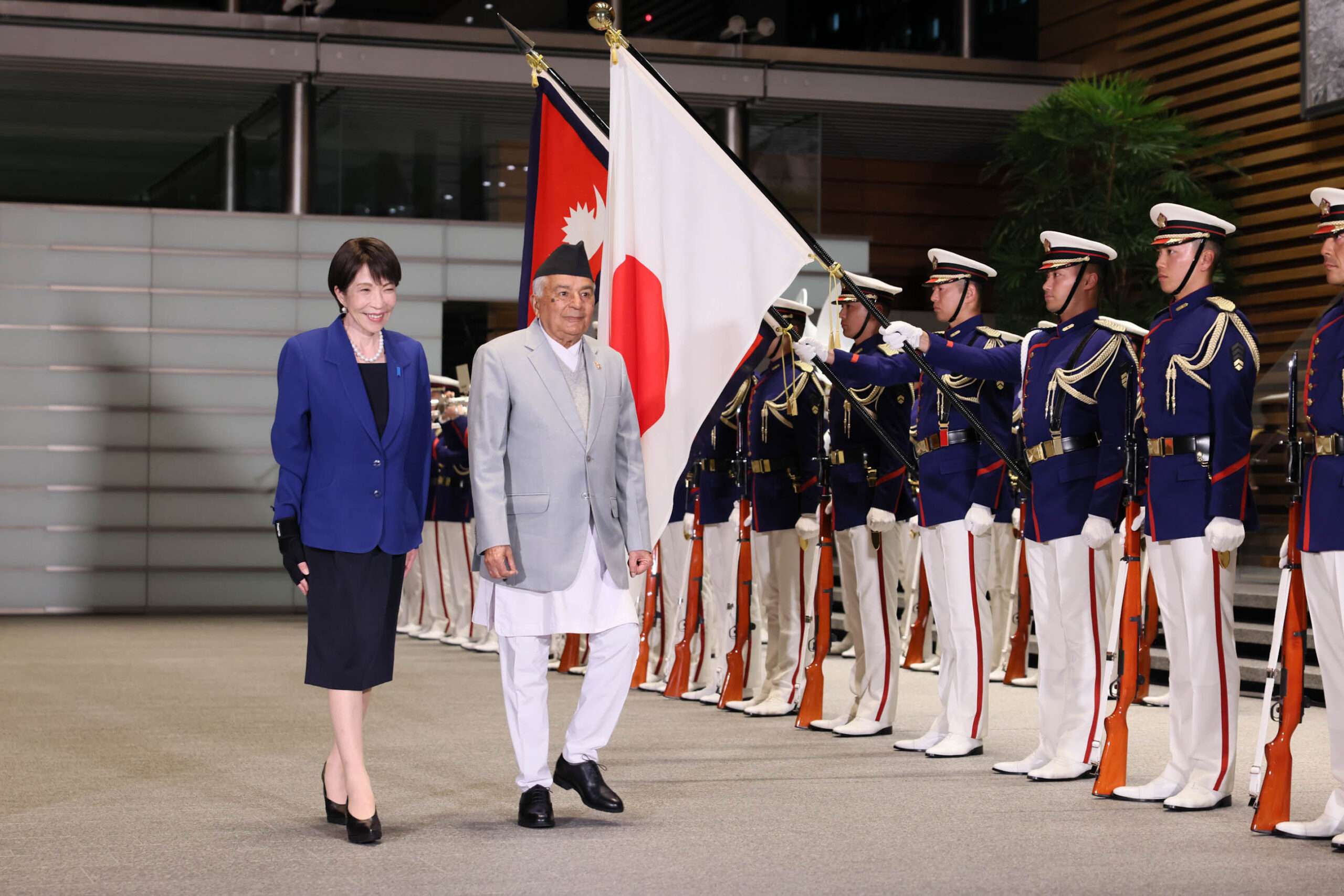
Nepal and Japan share a long-standing relationship based on friendship, mutual respect, cooperation, education, cultural exchange, and people-to-people connections. Although Nepal and Japan formally established diplomatic relations on September 1, 1956, their relationship began much earlier through religious, educational, and cultural exchanges.
Over the decades, Japan has become one of Nepal’s important development partners, providing cooperation in agriculture, industry, hydropower, education, health, infrastructure, human-resource development, technology, and technical skills. People-to-people relations have also expanded significantly. Approximately 300 Japanese citizens live and work in Nepal, while around 300,000 Nepalese live in Japan for employment, business, education, and other purposes.
Japan’s remarkable transformation after the Second World War also provides valuable lessons for Nepal. Its emphasis on discipline, hard work, education, civic responsibility, technology, good governance, and efficient use of resources offers important examples for Nepal’s development.
At the same time, the relationship is entering a new phase. Japan is facing an aging population and declining birth rate, while the growing foreign population presents new challenges related to language, cultural understanding, and social integration. These developments make better preparation and stronger people-to-people understanding increasingly important.
Historical foundations
The historical connection between Nepal and Japan predates formal diplomatic relations. Japanese Buddhist monk Ekai Kawaguchi came to Nepal in 1899 while travelling toward Tibet to study Tibetan Buddhism. During his visit, he also visited Lumbini, the birthplace of Gautam Buddha. His visit represents one of the early connections between Nepal and Japan through their shared Buddhist heritage.
The educational relationship also has a significant early history. Eight Nepalese students were sent to Japan in 1902 during the tenure of Prime Minister Chandra Shumsher to study mining, mechanical engineering, manufacturing, technology, and advanced agriculture. After completing their three-year studies, they returned to Nepal in 1905 and contributed to the development of Nepal’s agricultural and industrial sectors.
These early exchanges demonstrate that Nepal–Japan relations developed through religion, education, knowledge exchange, and mutual interest long before the establishment of formal diplomatic relations.
Nepal and Japan established formal diplomatic relations on September 1, 1956. Since then, cooperation has expanded across many sectors, including agriculture and industrial development, hydropower and infrastructure, education and health, human-resource development and technology and technical skills.
Japan’s long-term support through financial assistance, technology, expertise, and human-resource development has contributed to Nepal’s economic and social development and strengthened trust between the two countries.
The relationship has also expanded beyond government-to-government cooperation. Students, workers, businesses, development organizations, educational institutions, and civil-society organizations have become important actors in strengthening bilateral relations.
Values and lessons for Nepal
Japan’s post-war transformation is one of the important examples of national reconstruction and economic development. Nepal does not need to copy Japan’s policies, but it can learn from the values and social practices that contributed to Japan’s progress.
Discipline is strongly reflected in Japanese society. People generally follow rules, respect time, and demonstrate patience and orderly behavior in public places. Honesty, responsibility, punctuality, perseverance, and respect for others are important characteristics that Nepal can also strengthen in public and private life.
The Japanese proverb “Nana Korobi Yaoki”, meaning “Fall seven times, get up eight times,” reflects resilience and the importance of continuing despite difficulties.
Besides, Japanese society places dignity on different professions and emphasizes the value of honest work. Children are encouraged to think independently, distinguish between right and wrong, and take responsibility for their decisions. Respect for older people is also an important social value.
These practices demonstrate the importance of dignity, mutual respect, responsibility, and cooperation in building a strong society.
Japan also places strong emphasis on equality. Examples include the regular transfer of government employees between areas, generally every three years, and the practice of having children living in the same area attend the same primary school.
Such practices demonstrate that equality can be promoted not only through laws but also through practical policies and everyday social institutions. Nepal can also consider how similar principles can contribute to greater fairness and social cohesion.
Cleanliness is treated as a shared responsibility in Japan. It extends from homes to schools, roads, parks, and other public spaces. People are encouraged to manage their own waste and contribute to clean surroundings.
Community activities, volunteer work, festivals, and other collective activities also promote cooperation and responsibility for the common good. Nepal can learn from this approach by encouraging individuals and communities to take greater responsibility for public spaces and community development.
Furthermore, education occupies an important position in Japanese society. It is not limited to academic knowledge but also develops discipline, independence, responsibility, and practical skills.
The early educational exchange between Nepal and Japan provides a good example. The eight Nepalese students who studied in Japan in 1902 returned with technical knowledge that contributed to Nepal’s agricultural and industrial development.
Nepal can strengthen its education system by giving greater emphasis to practical skills, technical knowledge, discipline, and human-resource development.
Japanese lifestyle practices also provide lessons related to health and longevity. Balanced meals based on fresh and seasonal products, regular physical activity, appropriate daily routines, and other healthy practices contribute to overall well-being.
The broader lesson for Nepal is the importance of balanced diets, healthy lifestyles, physical activity, and responsible daily routines.
Japanese work culture is associated with diligence, responsibility, perseverance, and commitment. The concept of “Gaman”, meaning perseverance, patience, or endurance, reflects the ability to continue working despite difficulties.
Japan’s economic development was supported by skilled human-resource development, savings and investment, technological development, strong work discipline, civic responsibility, good governance, long-term commitment, cooperation, and respect for education and skills. These factors together contributed to Japan’s transformation.
Emerging challenges
Despite its achievements, Japan is facing important demographic and social challenges. A declining birth rate and increasing elderly population are creating pressure on the future labour force, economic productivity, and social welfare systems. At the same time, Japan is becoming increasingly international, creating new questions about cultural identity, integration, and social cohesion.
Japan is also experiencing a significant increase in its foreign population. Approximately 4.13 million foreign nationals are living in Japan, of whom around 300,000 are Nepalese.
Foreign workers and students contribute significantly to Japanese society and the economy. However, the growing foreign population also creates challenges related to language barriers, cultural misunderstandings, social isolation, administrative procedures, and adaptation to everyday life.
Greater mutual understanding between Japanese society and foreign residents is therefore necessary.
For Nepalese living in Japan, Japanese-language ability is particularly important. Without adequate language skills, employment, education, social relationships, access to services, and communication with authorities can become difficult.
Cultural differences can also create adjustment challenges. Food habits, workplace behavior, social norms, public conduct, communal bathing, and other aspects of daily life may be unfamiliar to newcomers.
Therefore, Nepalese planning to travel to Japan need to learn the Japanese language and understand Japanese culture, customs, social norms, rules, laws, and everyday life before departure.
A major concern is the reported loss of Nepalese lives to suicide in Japan. In the last 10 months, 25 Nepalese have reportedly died by suicide. These incidents are deeply tragic for individuals, families, and both societies.
This issue requires serious attention from the governments of Nepal and Japan, employers, communities, organizations involved in sending Nepalese to Japan, and Nepalese themselves. Greater emphasis must be placed on prevention, preparation, communication, and support both before departure and after arrival.
Way forward
The existing pre-departure orientation system should not be treated merely as a short formality. A comprehensive orientation program is necessary to prepare Nepalese for life and work in Japan.
The program should cover Japanese language and culture, food and eating customs, daily life and workplace behavior, social norms and public behavior, rules, regulations, and Japanese laws, communication and administrative procedures and responsibilities of foreign residents.
Relevant government agencies and organizations should work together to develop such a program. Key stakeholders include relevant ministries and departments, the Embassy of Japan in Nepal, the Embassy of Nepal in Japan, JICA, foreign-employment agencies, and organizations working to strengthen Nepal–Japan relations.
Experts with practical experience of Japan should also participate in designing and delivering the program.
A three-to-five-day orientation package should be developed, approved by the Government of Nepal, and delivered by qualified trainers.
Language preparation should be an essential component of the system. Nepalese travelling to Japan should possess at least N4-level Japanese-language proficiency, demonstrated through a recognized examination system such as JLPT or JFT.
However, language proficiency alone is not sufficient. Language training should be combined with cultural and practical orientation. Completing language training, passing the required examination, undertaking quality orientation, and receiving certification before departure could improve preparedness and reduce problems after arrival.
Nepal should focus on quality rather than simply quantity when sending workers to Japan. Japan needs young workers in various sectors, while Nepal has a large population of young people seeking employment. This creates a significant opportunity for both countries.
However, sending large numbers of workers without adequate preparation can create difficulties for individuals and communities. Nepal should therefore develop a reliable system for sending people who possess Japanese-language skills, knowledge of Japanese culture and daily life, understanding of rules and laws, appropriate workplace skills and quality pre-departure orientation. Such a system would protect Nepalese workers while helping Japan receive skilled, prepared, and responsible human resources.
The future of Nepal–Japan relations depends not only on governments but also on individuals, communities, businesses, educational institutions, employers, and civil-society organizations.
The governments of both countries should develop effective policies and support systems. Japanese employers and communities can help foreign workers understand Japanese society and create environments based on mutual respect. Nepalese institutions can contribute through language training, cultural education, worker preparation, and support services.
Nepalese living in Japan also have an important responsibility to learn the language, understand Japanese customs, obey laws, respect local communities, and adapt responsibly to Japanese society.