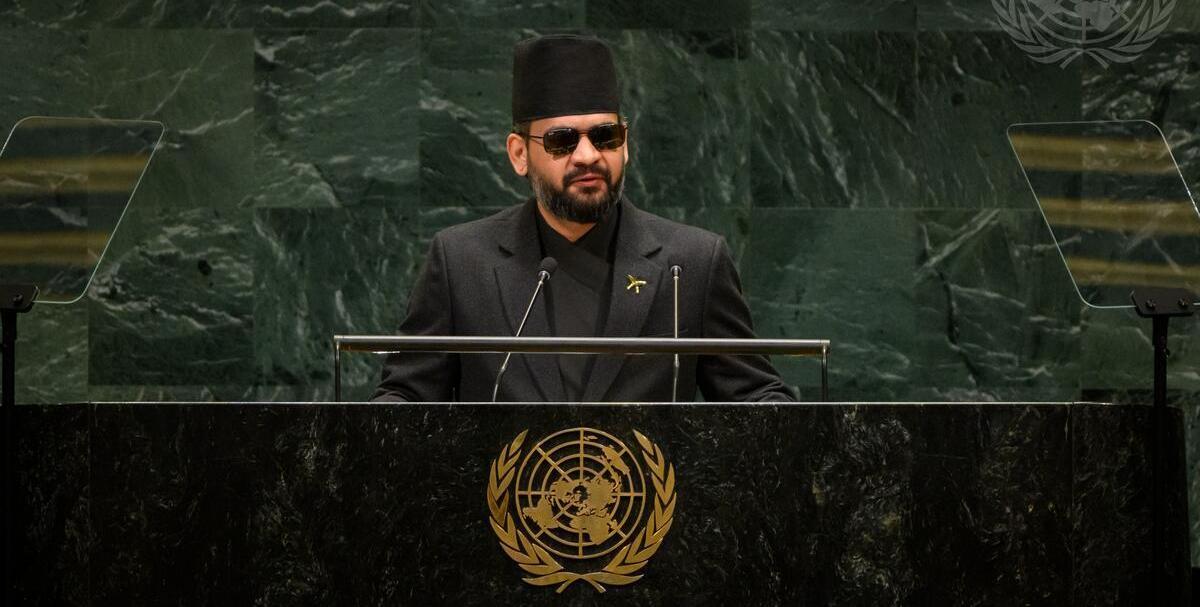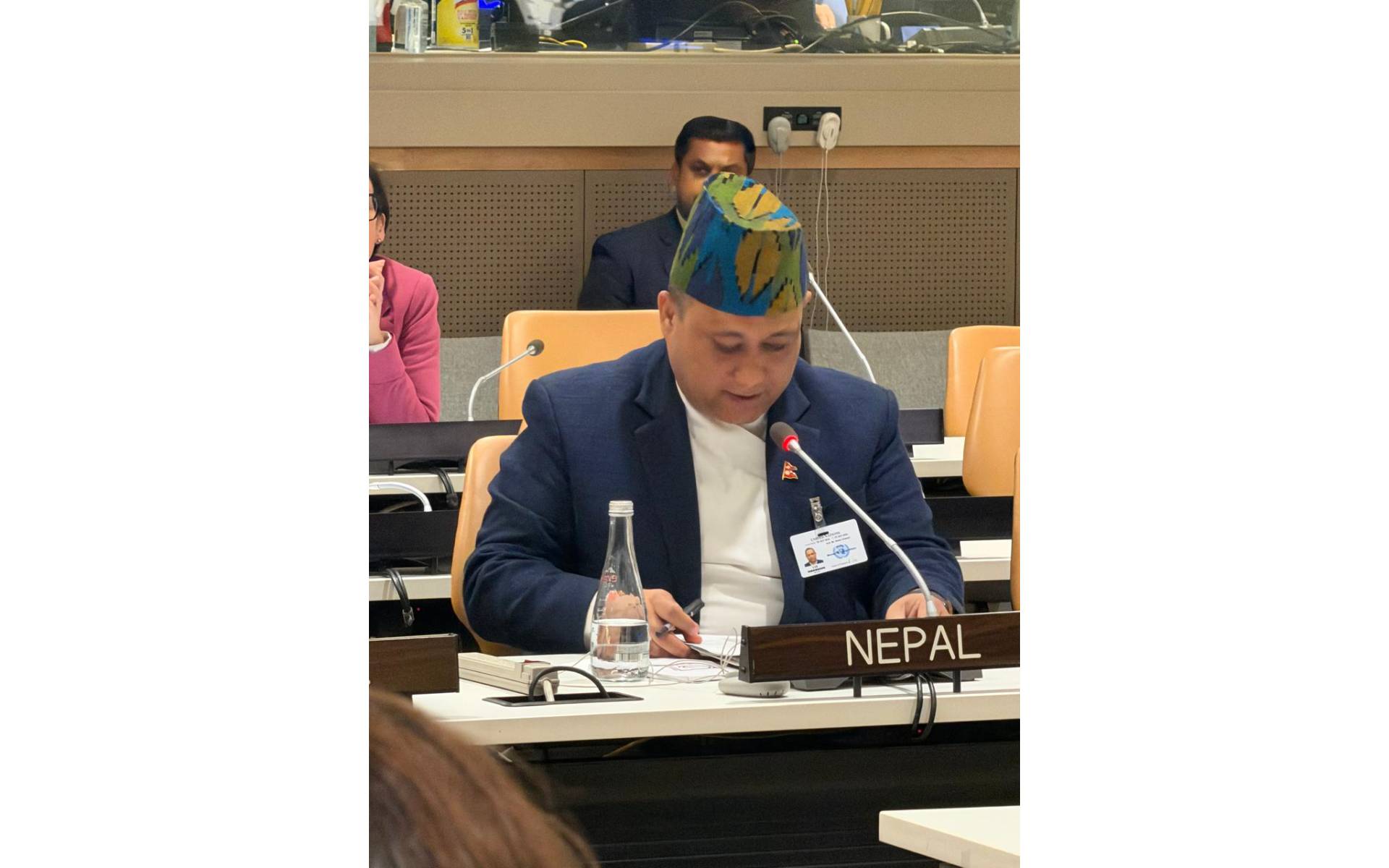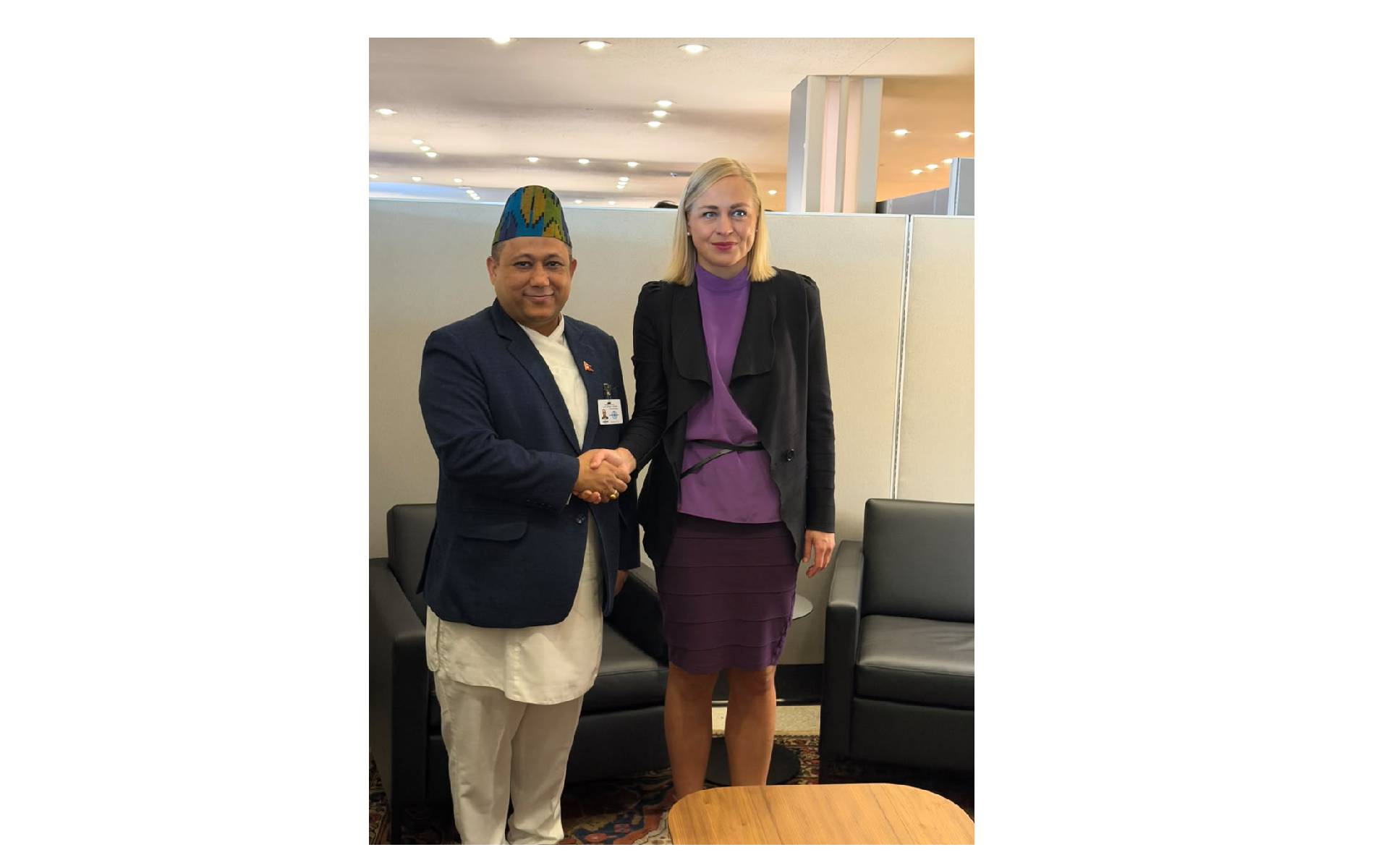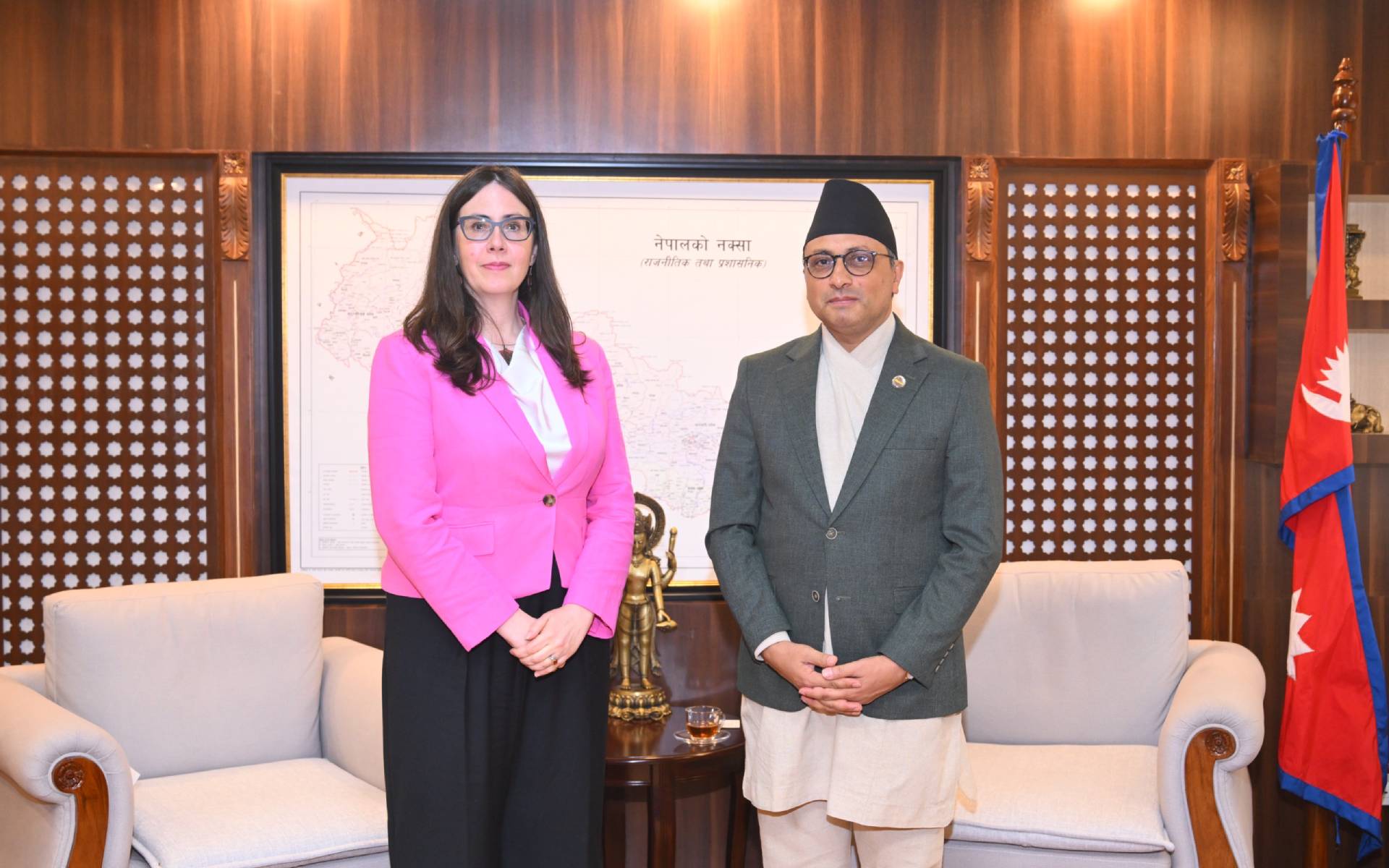
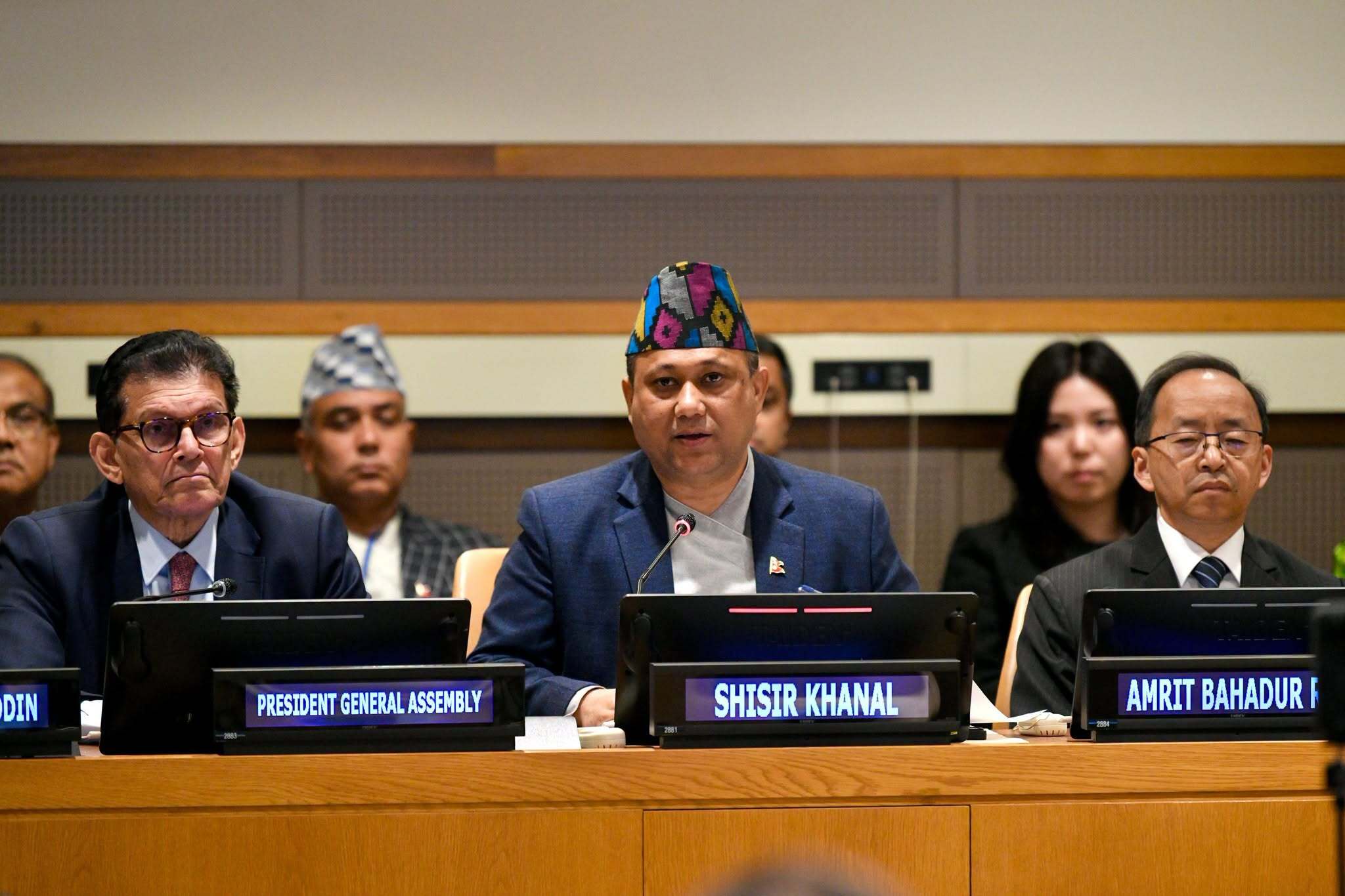
Kathmandu: Foreign Minister Shisir Khanal has called for stronger international cooperation linking mountain ecosystems, freshwater systems and oceans, stressing that climate change transcends political and geographical boundaries.
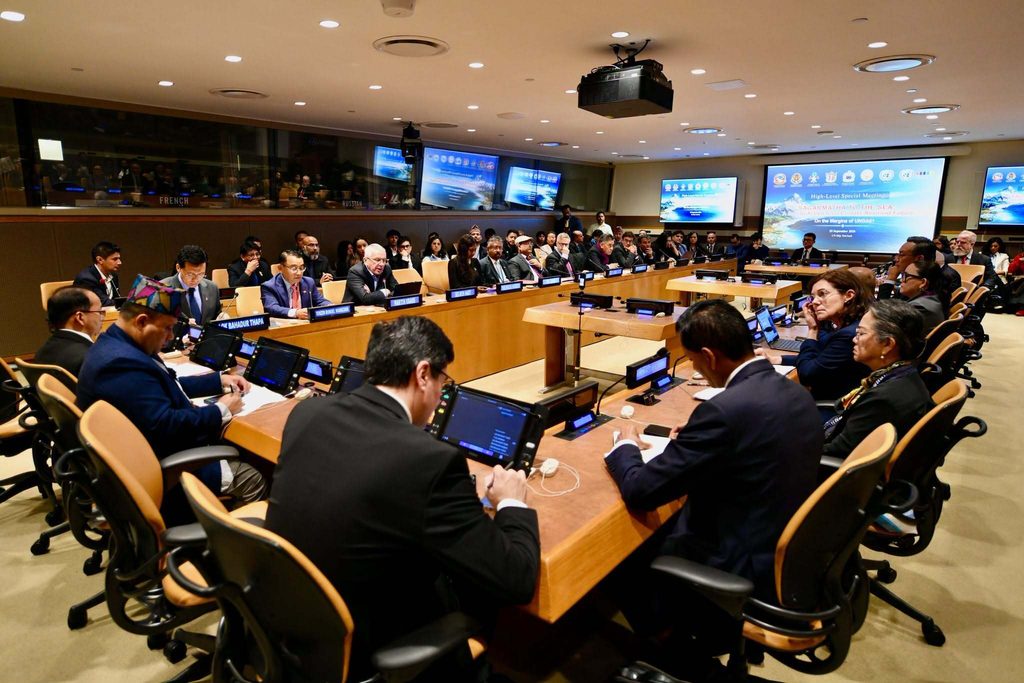
Addressing a high-level special event, “Sagarmatha to the Sea: A Call to Action for a Climate-Resilient Future,” at the United Nations Headquarters in New York on September 26, Minister Khanal said the initiative sought to bring mountain, island and coastal perspectives into a common climate conversation.
The event was organised with the participation of Bhutan, the Maldives, New Zealand, Samoa and Tajikistan, alongside UN agencies, including the United Nations Environment Programme (UNEP) and the United Nations Economic and Social Commission for Asia and the Pacific (ESCAP).
Khanal referred to the 26 August disaster in Nepal’s Langtang region, where a massive collapse of rock and glacier ice triggered what he termed a “Himalayan Tsunami”, resulting in loss of life and damage to homes and vital infrastructure.
Highlighting the interconnectedness of the global climate system, Khanal said water descending from the Himalayas through glaciers and rivers nourishes ecosystems and communities before eventually reaching the sea. He noted that Nepal had lost close to one-third of its ice over the past three decades.
He said the decline of glaciers was altering river flows and threatening downstream livelihoods, while island and coastal countries were facing rising sea levels, erosion and displacement.
Khanal outlined five priorities for climate action: recognising the ecological continuum connecting mountains, freshwater systems and oceans; giving greater prominence to mountains in international climate processes; keeping the 1.5°C temperature goal within reach through accelerated emissions reductions; strengthening early-warning systems, resilient infrastructure, anticipatory action and scientific cooperation; and ensuring adequate, predictable and accessible climate finance, technology and capacity-building for developing countries.
He also called for sufficient capitalisation and accessibility of the Fund for Responding to Loss and Damage, stressing that climate justice should reflect countries’ responsibility, capacity and vulnerability in the support they receive.
Khanal highlighted Nepal’s own efforts to address climate change, noting that forests cover around 46 per cent of the country’s territory and that clean hydropower, electric mobility and community-led conservation are expanding.
He also recalled that Nepal convened the first Sagarmatha Sambaad in 2025, focusing on climate change, mountains and the future of humanity. Nepal, he said, looks forward to welcoming the international community to the second edition next year.
Khanal said “Sagarmatha to the Sea” could evolve into a platform for knowledge-sharing, partnership and practical cooperation.
“The mountain and the sea may appear far apart on a map, but nature tells us otherwise,” he said, emphasising the need for collective action to protect the interconnected global climate system.
Addressing the same event, Foreign Secretary Amrit Bahadur Rai said the intensifying climate crisis had become an existential threat that transcended borders, ecosystems and generations.
“The journey from Sagarmatha to the Sea symbolises the deep ecological interdependence of our planet and the shared destiny of humankind,” Rai said.
He stressed that climate finance must reach the countries and communities most vulnerable to climate change. He also called for greater emphasis on early-warning systems and early action so that vulnerable populations could be reached in time.
Rai further stressed the need to integrate climate risks into development and disaster-risk planning, guided by collective commitments under the Paris Agreement, outcomes of the Conference of the Parties (COP) and the advisory opinion of the International Court of Justice (ICJ).
He called for stronger regional and international cooperation, deeper solidarity and enhanced climate diplomacy to address the growing climate crisis.